
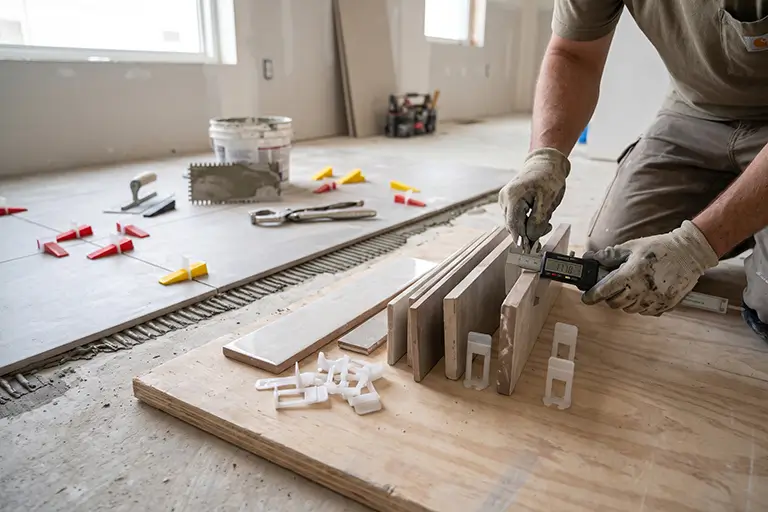
Choosing the correct tile leveling clip is an important part of achieving a smooth and professional tile installation. Different ceramic and porcelain tiles can have different thicknesses, so the leveling system should match the dimensions of the material being installed.
A clip that does not suit the tile thickness may not apply pressure correctly. This can make alignment more difficult and may reduce the effectiveness of the leveling system. For this reason, tile thickness, grout spacing, and installation conditions should be considered together before selecting a clip.
Tile Thickness
The first factor to consider is the thickness of the tile. Thin ceramic tiles and thick porcelain tiles may require different leveling clip designs.
The clip should fit comfortably beneath the tile without creating unnecessary pressure. It should also allow the wedge or screw component to operate within the correct range.
Grout Joint Width
Tile thickness is not the only factor that affects clip selection. The required grout joint width should also be considered.
Leveling clips are available in different spacer thicknesses. These dimensions determine the distance between neighboring tiles during installation.
A narrow grout joint may be suitable for rectified tiles with precise edges. Other tiles may require slightly wider joints to accommodate dimensional differences.
The selected clip should therefore match both tile thickness and the desired joint width.
Using the same clip size across the installation helps create consistent grout lines. This makes the finished surface look more balanced and professional.
Installers should also check manufacturer recommendations before choosing very narrow spacing. Tile type, size, and application area may influence the minimum suitable joint width.
Clip Compatibility
A tile leveling clip should work correctly with the wedge, pliers, or tightening component used in the system.
Mixing incompatible parts may reduce leveling performance. A wedge that does not fit the clip correctly may apply uneven pressure or become difficult to remove after the adhesive cures.
For this reason, installers should preferably use components designed to work together within the same leveling system.
The application area should also be considered. Floor installations and wall installations can require different working positions. Some clips may be easier to use in one type of application than another.
Large-format porcelain tiles, standard ceramic tiles, and thicker materials may also place different demands on the leveling system.
Testing a small section before starting a large project can help confirm compatibility. Installers can check whether the clip fits the tile thickness, whether the wedge tightens correctly, and whether the grout spacing remains consistent.