
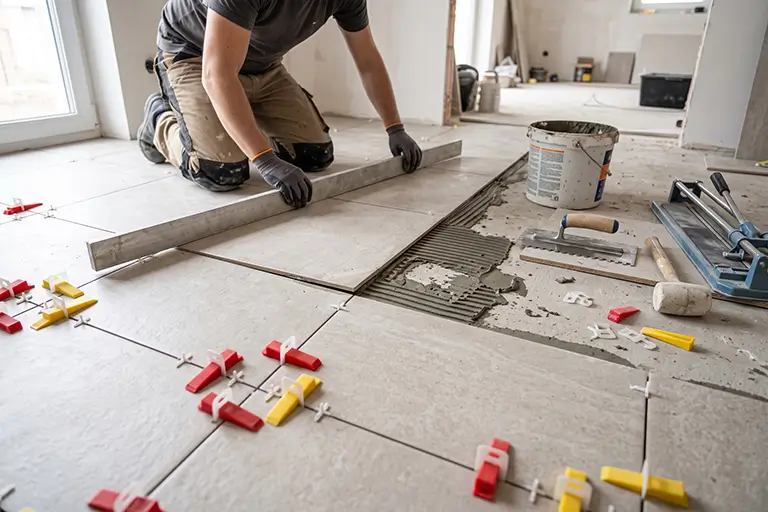
A successful tile installation requires more than placing tiles on adhesive. Small errors during preparation, spacing, leveling, or adhesive application can affect the final surface. These tile installation mistakes may lead to uneven joints, lippage, weak bonding, or an inconsistent appearance.
Professional installers reduce these risks by preparing the surface correctly and checking each stage of the application. Using the right tools also helps create a cleaner and more durable result.
Poor Surface Preparation
One of the most common mistakes is installing tiles on an uneven or dirty surface. Dust, loose material, cracks, or height differences can reduce adhesion and make alignment more difficult.
Before installation, the substrate should be clean, stable, and as level as possible.
Incorrect Adhesive Application
Poor adhesive coverage is another frequent cause of tile installation mistakes. Applying too little adhesive can leave empty spaces under the tile. Using too much can make height control more difficult.
Installers should choose a notched trowel that matches the tile size and adhesive type. The adhesive should be spread consistently across the installation surface.
For large-format tiles, back-buttering can improve contact. This method involves applying a thin adhesive layer to the back of the tile before placement.
The direction of the adhesive ridges also matters. Consistent trowel movement helps air escape when the tile is pressed into position.
Installers should periodically lift a tile to check adhesive coverage. This simple control can reveal problems before a large area has been completed.
Uneven Spacing and Leveling
Inconsistent grout joints can make even high-quality tiles look poorly installed. Trying to estimate spacing by eye often creates irregular lines across the surface.
Tile spacers help maintain consistent distances between neighboring tiles. The correct spacer thickness depends on the tile type, dimensions, and project requirements.
Height differences are another common issue. A tile may sit slightly above or below the tile next to it, creating lippage.
A tile leveling system can help control this problem. Clips, wedges, or screw-type leveling components keep neighboring tiles aligned while the adhesive sets.
Installers should still check alignment with a straightedge or level. Leveling systems support the installation process, but they do not replace proper surface preparation.