
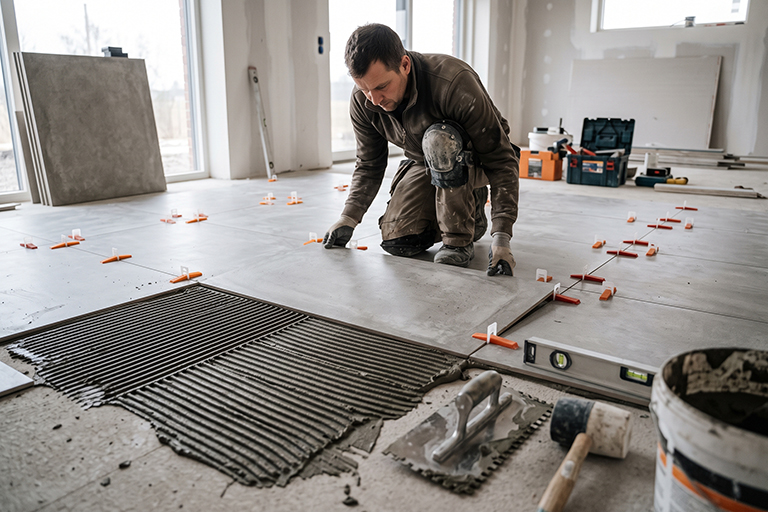
Large-format ceramic and porcelain tiles create modern and visually continuous surfaces. However, their size also makes installation more demanding. Even a small height difference between neighboring tiles can become clearly visible across a large surface.
A large format tile leveling system helps installers control these differences during installation. It keeps adjacent tiles aligned while the adhesive cures. As a result, installers can achieve flatter surfaces, cleaner grout lines, and a more professional finish.
Why Are Large-Format Tiles More Difficult to Install?
Large tiles cover a wider surface area than standard ceramic tiles. Therefore, small variations in the substrate or adhesive layer can affect a much larger section of the tile.
A Large Format Tile Leveling System Helps Reduce Lippage
Lippage occurs when the edge of one tile sits higher or lower than the neighboring tile. It can affect both appearance and surface comfort.
A large format tile leveling system applies controlled pressure between adjacent tiles. Clips, wedges, or screw-type components help keep tile surfaces at a similar height while the adhesive sets.
This process reduces the need for repeated manual adjustments. It also helps installers identify alignment problems before the adhesive becomes too firm.
Consistent Alignment Creates a Cleaner Surface
Large-format tiles often feature marble, stone, concrete, or other continuous visual patterns. Uneven tile positioning can interrupt these designs and make the installation look less professional.
Proper leveling helps maintain a more consistent surface. Straight grout joints and aligned tile edges also improve the overall visual balance.
This becomes especially important in large bathrooms, kitchens, commercial spaces, showrooms, and open-plan interiors.